Our Heart
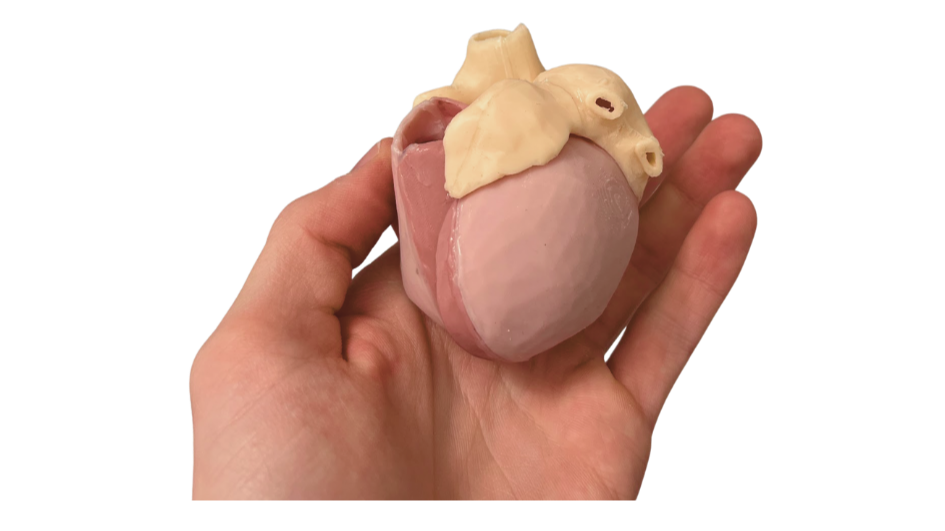
The silicone-based heart models we’ve developed are anatomically accurate representations of common congenital heart defects, designed to enhance surgical training and education. They provide a hands-on, durable, and affordable way for trainees and surgeons—especially in low-resource settings—to visualize and practice navigating complex intracardiac structures. By offering realistic spatial orientation and tactile feedback, the models help bridge the gap between theory and operative experience.
Making Our Heart
We started with an open-source CAD file and simplified it, keeping only the anatomy that truly matters for surgical training. Each structure was carefully segmented so we could reliably mold and cast every component.
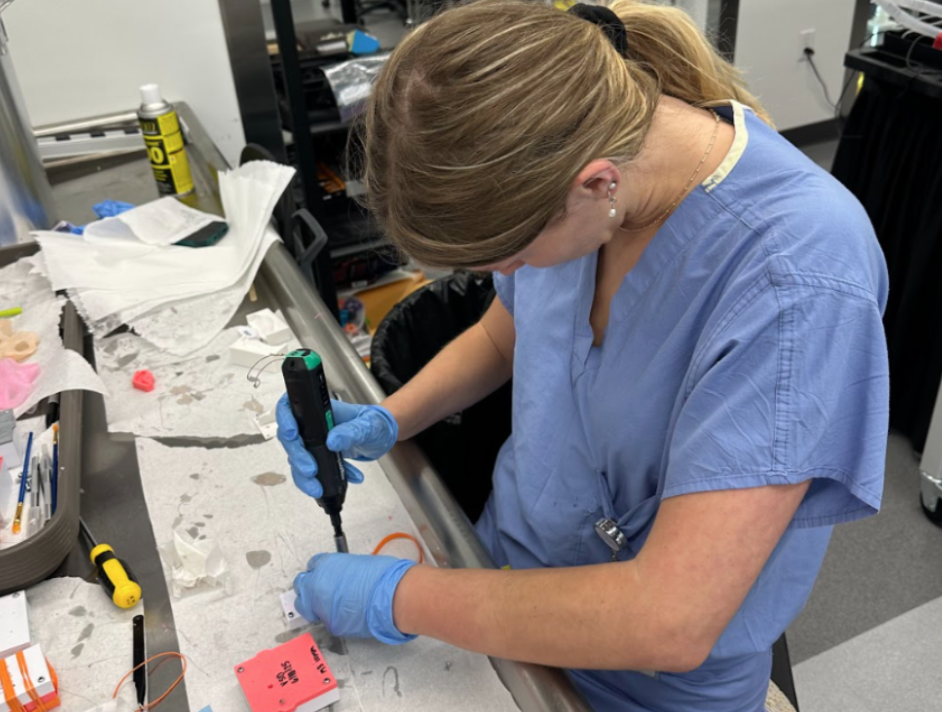
Using Bambu X1 and A1 printers, we created PLA molds with added supports, filled gaps, and lightly sanded surfaces to ensure smooth internal features. To improve casting consistency, we designed the molds with proper injection ports, air-release channels, screw-fastened lids, and a silicone-safe release agent brushed into detailed areas. More complex regions—like the left atrium—were split into multiple sections so the silicone could be removed without tearing.
After curing, each part was assembled using a parts-and-assembly approach, with seams reinforced for durability.
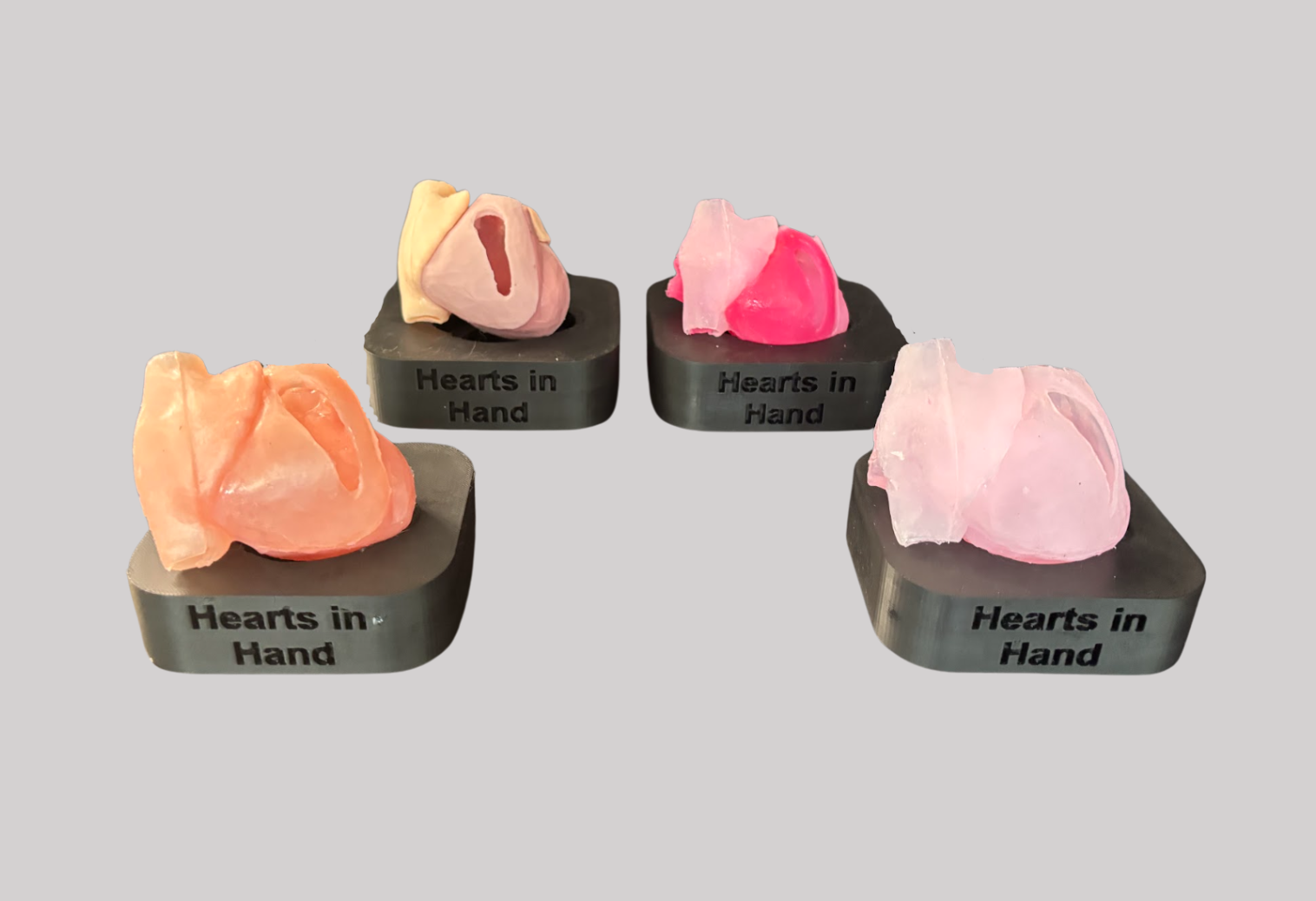
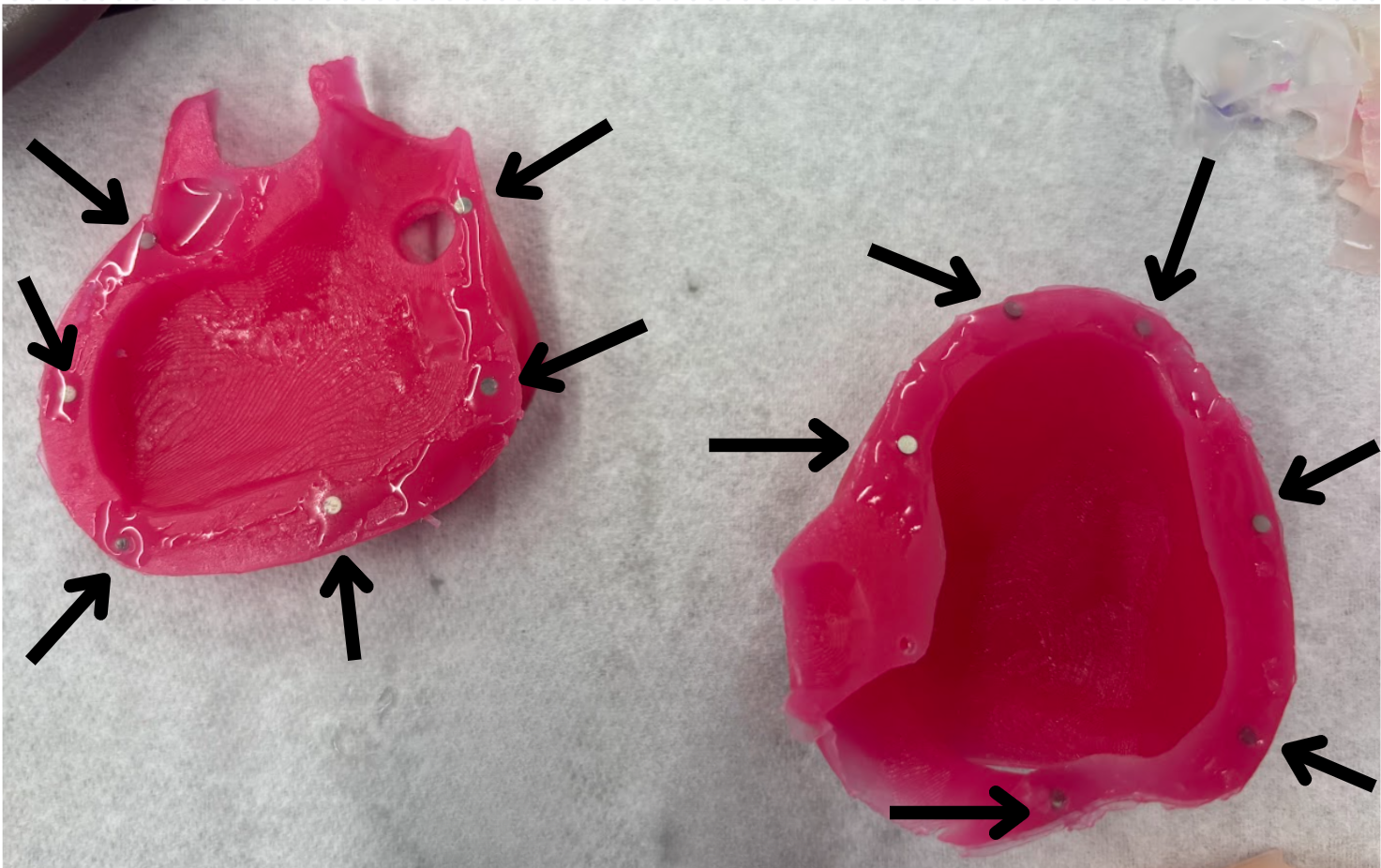
Our latest models feature major refinements: molded tricuspid and aortic valves, magnet-ready recesses for removable VSD septa, improved pry points for easier demolding, and standardized labeling that streamlines fabrication.
These updates have made the hearts more realistic, more durable, and far easier to reproduce—moving us closer to scalable, affordable, high-fidelity surgical training tools for global cardiac missions.
Where We Are Now
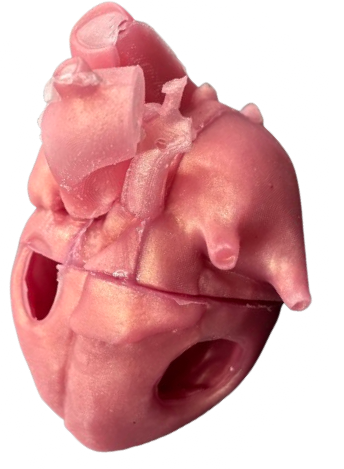
We’re focused on making the heart model simpler, faster, and cheaper to produce. A key next step is further developing our magnetized, reusable components—including improved, swappable valves—to make the model more durable and adaptable for training. Another key step is the creation of various other pathologies, such as tetralogy of fallot seen in the image to the left.
We also plan to pilot the heart on a medical mission in a low- and middle-income country, working with global surgery partners to test its real-world impact. We are also developing partnerships locally with groups interested in increasing access to CHD education and care.
Ultimately, we hope to collaborate with local agencies for in-country production, ensuring long-term sustainability and access where these tools are needed most.
Where We Want To Go