Hearts in Hand attends the 9th World Congress of Pediatric Cardiology and Cardiac Surgery
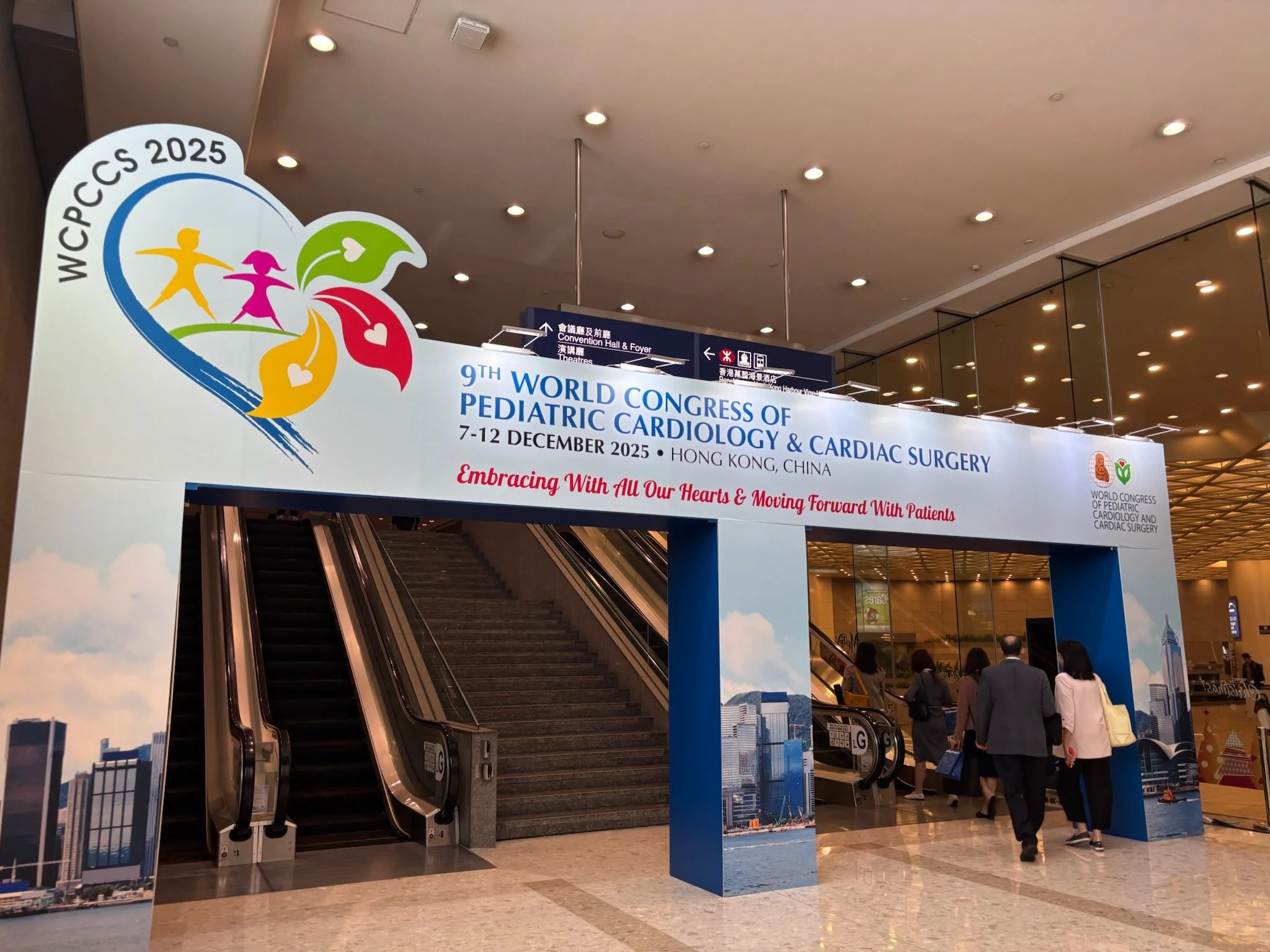
Jason Schutt and Reagan Oliphant, both third-year medical students, had the privilege of attending the 9th World Congress of Pediatric Cardiology and Cardiac Surgery in Hong Kong. The congress provided a unique international forum to engage with leaders in pediatric cardiology, cardiac surgery, as well as global health, while sharing student-led innovation focused on improving education and care delivery.
At the meeting, Jason and Reagan discussed their work with Hearts in Hand with key opinion leaders in congenital cardiac surgery and global surgery initiatives. Attending a global conference allowed for constructive dialogue with clinicians from diverse practice environments and offered valuable perspective on how educational tools can be adapted to meet varied clinical and resource constraints.
Jason and Reagan attended numerous sessions within the Global Advocacy Track, which focused on pediatric cardiac care in low- and middle-income countries. These sessions emphasized disparities in access to surgical care, workforce limitations, and infrastructure challenges, while also showcasing innovative, collaborative strategies aimed at expanding sustainable pediatric cardiac services worldwide.
The congress also facilitated meaningful engagement with the cardiac modeling team from The Hospital for Sick Children (SickKids) in Toronto. Jason and Reagan connected with members of SickKids’ heart model division to discuss how Hearts-in-Hand models compare with existing institutional models and to explore strategies for improving anatomical fidelity, usability, and educational value while maintaining a low-cost, scalable design. These discussions provided valuable technical insight and reinforced the importance of cost-conscious innovation in global medical education. They also allowed Jason and Reagan to perform surgery on our heart model!
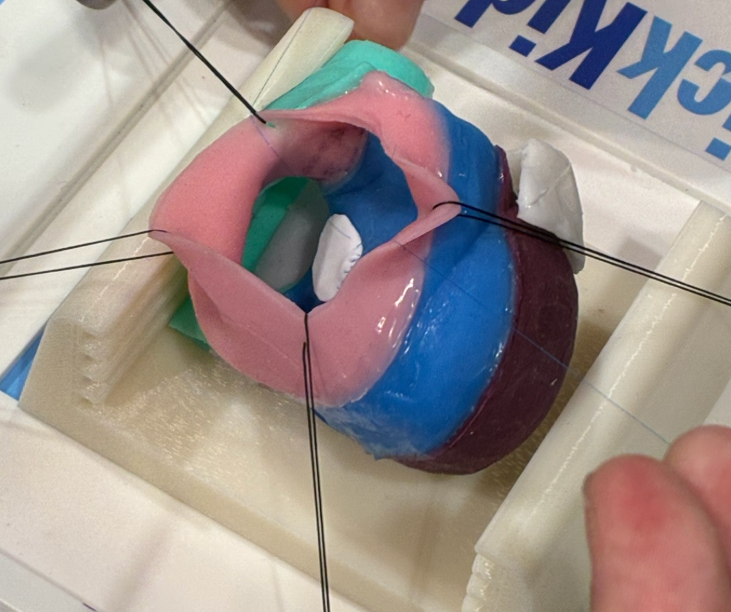
Our heart model, with a silicone patch sew into the septum wall
A key outcome of the congress was the opportunity to connect with pediatric cardiologists and cardiothoracic surgeons from across the globe. These discussions provided meaningful feedback on the design, utility, and scalability of the Hearts-in-Hand cardiac models. Furthermore, these interactions laid the groundwork for potential long-term partnerships, with the shared goal of continuing collaboration and supporting the distribution of cardiac models to various countries to enhance education and training.
Overall, participation in the 9th World Congress reinforced the importance of global advocacy, interdisciplinary collaboration, and thoughtful medical innovation. The experience strengthened a commitment to advancing equitable pediatric cardiac care through education, partnership, and sustainable design.
